
Amsterdam Neighborhood Guide for Canals, Museums, and Cycling Routes
Plan Amsterdam with better neighborhood choices for canal-side walks, world-class museums, cycling routes, and a city rhythm that fits your stay.
Abkus Travel Editorial Team
Travel Guides and Hospitality Research
Choose a canal-side or central base that matches your walking and cycling pace
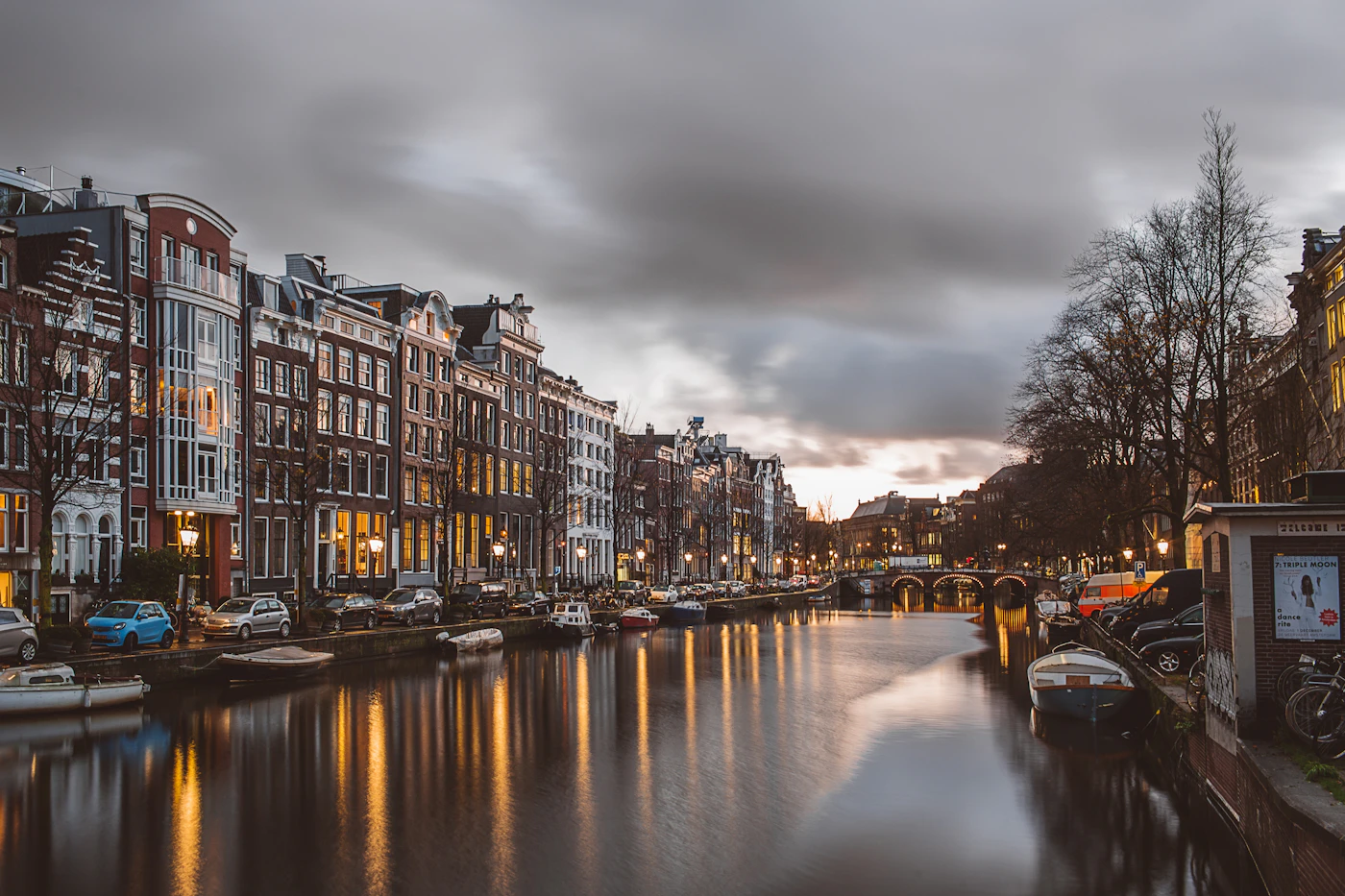
Amsterdam is one of the few European capitals where the neighborhood you sleep in genuinely reshapes the entire texture of the trip. The Canal Ring (Grachtengordel) — Herengracht, Keizersgracht, Prinsengracht — gives you golden hour light on the water from your window, 17th-century gabled houses reflecting in the canals, and a city that smells of rain and fresh bread in the early morning. This is historic Amsterdam at its most immediate and most beautiful.
The Jordaan, tucked just west of the Canal Ring, is quieter and more residential: small galleries, independent bookshops, brown cafés (bruine kroegen) with amber light and dark wood, neighborhood markets on Saturday mornings. De Pijp, south of Centraal, has the Albert Cuyp Market — the longest open-air market in the Netherlands — and a dense food scene that pulls on every continent. Oud-Zuid wraps the Museumplein and Vondelpark in a more polished, spacious atmosphere. None of these is wrong; they are just different relationships with the same city.
- Choose the Canal Ring or Jordaan for historic texture, canal-side atmosphere, and the feeling of living inside a 17th-century painting.
- Choose Oud-Zuid for museum access, Vondelpark mornings, and a slightly more spacious and less tourist-dense experience.
- Choose De Pijp for the best local food market, a genuinely multicultural neighborhood feel, and excellent restaurant access.
Rent a bike — at least for one day — and the city changes completely
Amsterdam has more bicycles than people, and the cycling infrastructure is so refined that it functions as a parallel city within the city. Bike lanes are separate from traffic, intersections are organized around cyclist priority, and the entire urban logic shifts once you are on two wheels. What takes twenty minutes on foot takes seven on a bike. Outer neighborhoods like De Baarsjes, Westerpark, Oost, and the leafy residential streets near Amstelpark become accessible in a way that fundamentally broadens the trip.
Renting is simple at any of the dozens of shops near Centraal Station or Leidseplein. Avoid the first hour near Centraal — it is crowded and complicated — and instead head immediately toward the Jordaan or Vondelpark to find your cycling rhythm in calmer streets. Once you have it, the Canal Ring becomes a slow loop rather than a sightseeing corridor, and you can stop whenever a bridge view, a café terrace, or a cheese shop window demands it.
- Rent a basic three-speed bike for at least one full day — it is one of the most enjoyable single decisions you can make in Amsterdam.
- Head to Vondelpark or the Jordaan first to get comfortable before navigating busier canal-side streets.
- Consider a cycling tour for the first few hours to understand Dutch traffic logic before going solo.
Time your museum visits strategically to avoid the longest queues
The Rijksmuseum holds Rembrandt's Night Watch in a room designed specifically for that painting — a cathedral of Dutch art that is worth every queue it demands. The Van Gogh Museum, directly opposite across the Museumplein, is one of the world's great single-artist collections, dense with sunflowers, self-portraits, and correspondence displayed alongside the canvases. Both museums are best visited on weekday mornings with pre-booked timed-entry tickets purchased at least a week in advance.
The Anne Frank House requires advance booking months ahead during peak season — do not arrive hoping for a walk-in ticket in July or August. The Stedelijk Museum (modern art) and the Moco Museum (Banksy and contemporary work) are easier to enter without long planning. If the trip allows it, the Hermitage Amsterdam and EYE Film Museum in Amsterdam Noord offer a different quality of afternoon, especially if combined with a free ferry ride across the IJ River that gives a striking view of the city from the water.
- Book Rijksmuseum, Van Gogh Museum, and Anne Frank House timed tickets online well in advance — walk-in queues can exceed two hours.
- Visit Museumplein on a dry weekday morning for the best combination of crowd control and natural light inside the galleries.
- Cross the IJ by free ferry to Amsterdam Noord to see the city from a completely different angle and visit the EYE Film Institute.
Eat the city neighborhood by neighborhood rather than chasing restaurant lists
Amsterdam's best food moments are not always the most famous. The raw herring (nieuwe haring) served at a street stall, grabbed by the tail and lowered into your mouth with diced onion and pickles, is one of the defining local experiences — strange, briny, deeply Dutch. Stroopwafels pressed fresh at the market and eaten warm are another. A bowl of stamppot (mashed potato with kale or sauerkraut) at a brown café on a rainy afternoon is one of those meals that makes sense nowhere else in the world.
For more considered dining, De Pijp has the most interesting restaurant scene for the money, with strong Indonesian, Surinamese, and Mediterranean kitchens alongside newer Dutch-focused tables. The Jordaan and the canal streets near Elandsgracht have excellent wine bars and small plates. Foodhallen, a covered market near Ten Katemarkt, brings together a wide range of stalls and is best visited for lunch or an early evening before the dinner rush makes it cramped.
- Try haring (raw herring) at least once from a street stall — it is one of the most authentically Dutch food experiences available.
- Eat at Albert Cuyp Market on a Saturday morning for stroopwafels, fresh produce, and a vivid slice of neighborhood life.
- Explore De Pijp's restaurant streets in the evening for the city's best combination of variety, price, and local atmosphere.
Build one day around the canals and let the rest follow naturally
Amsterdam rewards travelers who don't schedule every hour. The most memorable Amsterd days often emerge from a plan that pairs one anchor experience with generous time for everything that opens up around it. Take a canal boat tour in the morning to understand the city's layout from the water, then spend the afternoon walking the Jordaan without a fixed destination. Turning into any alley, crossing any bridge, stopping at any window that holds your attention — this is how Amsterdam gives you its best version of itself.
Weather in Amsterdam is genuinely variable, especially in spring and autumn. A light rain is not a reason to abandon the streets — the canals look extraordinary in soft grey light, and the brown cafés fill with exactly the kind of warmth that makes a wet Tuesday afternoon in a northern European city feel like an entirely intentional pleasure. Pack one layer more than you think you need, carry a compact umbrella, and plan each evening around something that works whether or not the sun appeared during the day.
- Book a canal boat tour for day one — it gives spatial orientation and a different quality of light on the city.
- Keep at least one afternoon completely unscheduled and let the Jordaan or the canal streets reveal themselves on their own terms.
- Pack a waterproof layer and treat rain as an opportunity rather than an obstacle — the best café moments in Amsterdam happen on overcast afternoons.
Services & Partners
Services related to this destination
Accommodation
Hotels & Guesthouses
Advertise your hotel at this destination
See pricing →
Transport
Car Rentals
Local rental companies and transfers
Browse cars →
Experiences
Tours & Guides
Local tours and guided experiences
See pricing →
Co-hosts
Co-host Management
Local co-hosts and property managers
View directory →
Collection
Global City BreaksRegion
EuropeDestination pages
Move from editorial context into city and region landing pages with inventory and broader market discovery.
Turn travel research into booking intent
High-intent editorial pages help travelers move from attraction research to neighborhood selection and, finally, to accommodation search.
Related articles

Destination Guides
Cairo Guide for the Pyramids, Islamic District, and Nile Access
Plan Cairo with better base choices, strategic pyramid timing, a route through Islamic Cairo's mosques and markets, and an understanding of how the city works for modern travelers.

Destination Guides
Cancún Guide for Beaches, the Hotel Zone, and Yucatan Access
Plan Cancún with better zone choices for beach quality, cenote day trips, Mayan ruins access, and a Caribbean destination that offers more depth than the all-inclusive formula suggests.
Related comparison guides
Comparison guide
Best Europe City Breaks for First-Time Visitors
Compare major European city breaks by walkability, cultural density, transit ease, and how forgiving they are for a first-time trip.
Comparison guide
Best Destinations for Family Trips with Culture and Walkability
Find destinations that combine cultural depth, manageable walking patterns, and accommodation choices that help mixed-age groups reset easily.
Comparison guide
Best Warm-Weather Destinations for Remote Work and Beach Access
Compare warm-weather destinations where beach time, work routines, and daily logistics can coexist without collapsing the trip.